If you’ve ever started laser hair removal and thought,
“Wait… why am I coming back again?”
—you’re not alone.
Laser hair removal works incredibly well, but it isn’t a one-and-done treatment. And there’s a very good reason for that — it has everything to do with how your hair grows, not how the laser works.
Let’s break it down in a way that actually makes sense.
Hair Doesn’t Grow All at Once (Even Though It Feels Like It Does)
Each hair on your body is doing its own thing. Hair grows in cycles, and every follicle is on a different schedule.
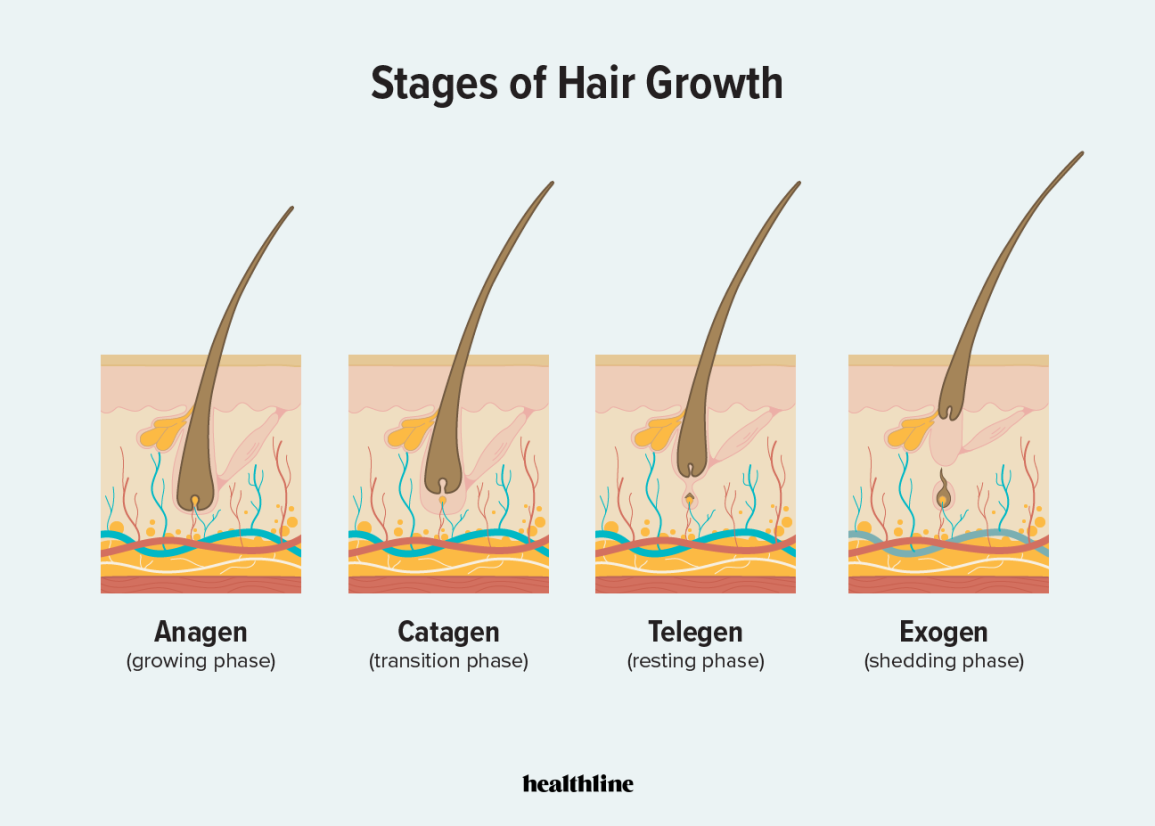
For laser hair removal, we focus on the three main phases of hair growth.
Anagen — the active growth phase
This is when the hair is growing and connected to the follicle’s blood supply.
It also contains the most pigment. This is the only phase where laser hair removal works.
Catagen — the transition phase
Hair growth slows down, and the follicle starts to detach. Laser energy isn’t very effective here.
Telogen — the resting phase
The hair isn’t growing at all and will eventually fall out on its own. Laser hair removal doesn’t work during this phase.
Here’s the key thing most people don’t realize:
At any given time, only about 10–30% of your hair is in the active (anagen) phase. So even though it may look like all the hair is there, only a small portion is actually treatable at one appointment. That’s the main reason laser hair removal takes multiple sessions.
What the Laser Is Actually Targeting
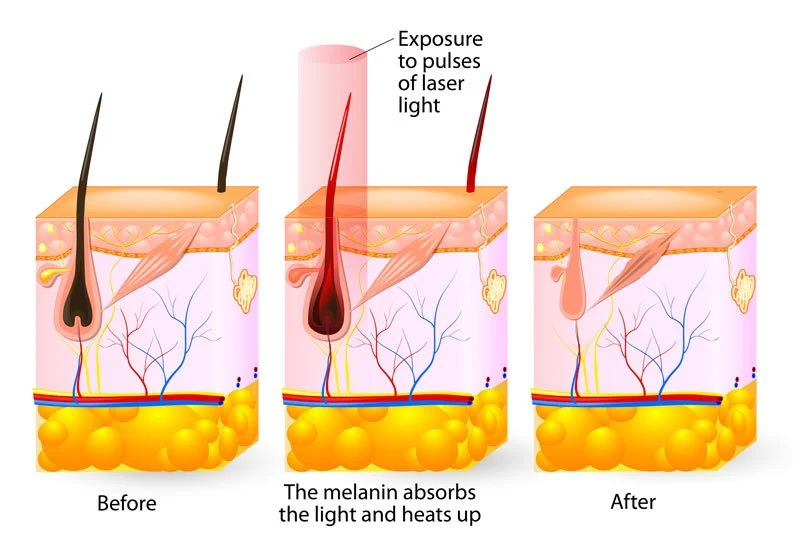
Laser hair removal doesn’t target the hair you see — it targets the pigment inside the hair follicle.
Laser energy is attracted to melanin, the pigment that gives hair its color, which is why timing matters. Pigment is strongest when hair is in the active growth phase — the only time laser hair removal can be effective. When the laser energy reaches the follicle during this phase, it converts to heat and damages the follicle’s ability to produce new hair.
Because the laser must be able to reach the pigment inside the follicle, we ask patients to shave — not wax or pluck — before treatment. Shaving removes surface hair while leaving the follicle and its pigment intact beneath the skin. Waxing or plucking removes the follicle entirely, which means there’s nothing for the laser to target.
Why Treatments Are Spaced Weeks Apart
Hair growth cycles vary based on:
- The area being treated
- Hormones
- Genetics
- Age
That’s why:
- Facial areas usually need treatments closer together
- Body areas are spaced farther apart
Spacing treatments properly allows us to treat the maximum number of active follicles safely and effectively over time.
Why Laser Hair Removal Focuses on Long-Term Hair Reduction
Laser hair removal is clinically proven to deliver long-term, permanent reduction in hair growth — meaning fewer hairs, finer regrowth, and smoother skin over time rather than a one-time removal.
What that means:
- Many follicles stop producing hair altogether
- Others may produce finer, lighter hair
- Hormonal changes can activate new follicles later in life
That’s why:
- A series of treatments is needed upfront
- Some patients choose occasional maintenance treatments over time
This is normal, expected, and consistent with FDA definitions and long-term studies.
When Will You See Results?
You won’t walk out hair-free the same day — and that’s normal.
After treatment:
- Treated hairs begin to shed over the next 1–3 weeks
- Each session typically reduces hair growth by 10–25%
- Results build gradually with each visit
Most patients need multiple sessions to achieve their desired level of reduction.
The Bottom Line
Laser hair removal takes time because:
- Hair grows in cycles
- Only active follicles respond to treatment
- Each session treats a different group of hairs
- Consistency is what delivers long-term results
When done correctly, laser hair removal is one of the most effective, science-backed solutions for unwanted hair — and well worth the commitment.
At Cosmetic Laser Center, laser hair removal isn’t just something we offer — it’s something we’ve perfected. With advanced technology, experienced laser professionals, and nearly three decades of caring for our community, you’re in expert hands every step of the way.
Curious about our Laser Hair Removal Package: Click to Learn More


